
October 8, 2026
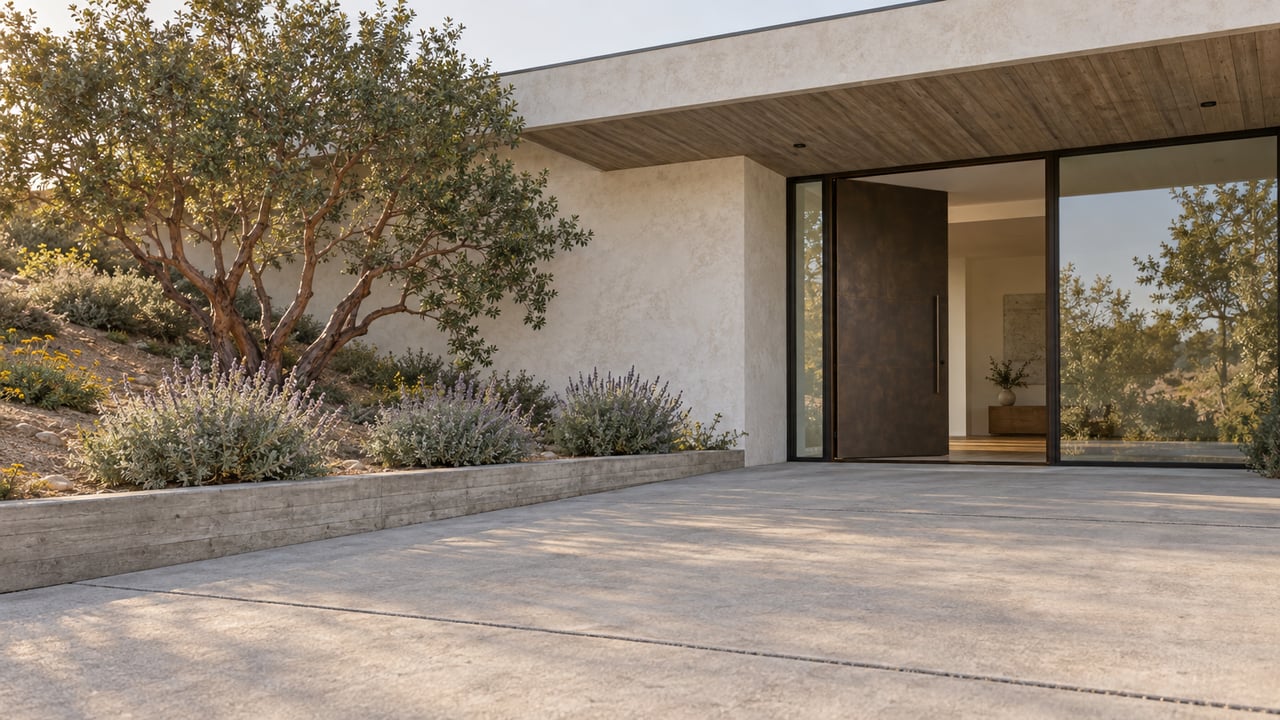
A completed Palisades Fire rebuild in Malibu is an encouraging milestone. It also shows the position a buyer of a burned lot would start from. A buyer can rebuild under the same disaster rules, but some advantages the original homeowners may have had would not come with the deed.
That split decides what a fire-damaged parcel is worth. Some of the advantages belong to the land, and others belong to the person who held title and lived there on the fire date. A buyer pays for the first set and inherits none of the second. A seller who signs before deciding which set they hold can give up value without seeing it.
Malibu's fire fee waiver program was adopted by the City Council on July 14, 2025, as Resolution No. 25-29. It waives City planning and building permit fees for like-for-like or like-for-like-plus-10% rebuilds. It covers only owners or heirs who used the property as their primary residence on the fire date. For the Palisades Fire that date is January 7, 2025. For the Franklin Fire it is December 9, 2024.
The paperwork is personal. The fee-waiver handout says the applicant must have been the legal owner, or held a controlling interest in the LLC or other entity that held title, as of the fire date. They must certify primary residency under penalty of perjury, back it up with documents such as voter registration or a driver's license showing the address, and record a notarized affidavit with the Los Angeles County Recorder's Office.
That recorded affidavit is where the transaction friction comes in. For LLC-held properties, the handout says the affidavit is recorded as a covenant that runs with the land and binds all successors in interest. If the property is sold before a certificate of occupancy is issued, the handout says the new owners must reimburse the waived fees, with a 90-day window tied to the sale. Until those fees are repaid, the development process is halted and no certificate of occupancy will be issued. The City also reserves the right to place a lien on the property. So a buyer of a partly rebuilt, fee-waived home takes on a repayment obligation along with the deed, and both sides need to price it before closing. If the waiver is repaid and released, preparing that release is the owner's job, and the owner pays to record it once the City signs off.
The program has its own deadlines. Applications and complete planning applications are due by June 30, 2028, and building permits must be obtained by December 30, 2030.
Temporary housing follows the same pattern. Under Ordinance 524, people living in a temporary structure on a burned lot must be the owners or tenants who lived on site on the disaster date, or their families. A new purchaser may not rent that structure to other people.
| Rebuild advantage | Tied to | What a buyer receives |
|---|---|---|
| City planning and building fee waiver | Fire-date owner or heir with primary residence | None. The new owner must reimburse waived fees if the sale comes before the certificate of occupancy |
| Temporary on-site housing | Fire-date owners or tenants and their families | Can't rent it to other people |
| Like-for-like plus 10% under Ordinance 524 and the LCP | The structure and parcel | Available under the codified criteria, subject to deadlines |
| Governor's CEQA and Coastal Act suspensions | The qualifying project | Framed by project, with no owner-at-fire-date condition |
| Elapsed time on the rebuild clock | The fire date | The buyer inherits whatever time is left |
The like-for-like row is the one most buyers are paying for. Ordinance 524 and the Local Coastal Program let a disaster-destroyed structure be replaced for the same use, up to 110% of its prior floor area, height or bulk, in substantially the same location. The codified criteria do not require the applicant to have owned the parcel on the fire date. Malibu has said so explicitly in the past. Its Woolsey Fire FAQ states that in-kind rebuild rights "go with the land," that a new owner can use the expedited processes and CDP exemptions if deadlines are met, and that a fee waiver the fire-date owner qualified for "is non-transferable."
That Woolsey guidance is a precedent. It is not a ruling on the 2025 fires. The City has not published Palisades- or Franklin-specific transfer guidance like the Woolsey change-in-ownership form, so buyers should get written confirmation from the Malibu Rebuild Center before relying on the pathway.
The state executive orders are written the same way. EO N-4-25 attaches its CEQA and Coastal Act suspensions to reconstruction projects in the same location and no more than 110% of the pre-fire footprint and height. It sets no condition on who owned the property during the fire. EO N-20-25 also defines eligibility by the project. The most recent official statement we found reaffirming these waivers is the Governor's January 6, 2026 release. Anyone relying on them today should confirm they are still in effect.
Like-for-like rights transfer, but their deadlines are measured from the fire date, not from the date of sale. Under Ordinance 524, a reconstruction application must be filed with the City within six years of the damage, and a building permit must be diligently pursued and obtained within eight years. The Planning Commission can grant hardship extensions up to a total of nine years for the application and eleven years for the permit. For a Palisades Fire parcel, the base deadlines are January 7, 2031 for the application and January 7, 2033 for the permit.
These windows are much longer than the ones after Woolsey. The City's Woolsey change-in-ownership form gave a new owner two years from the fire to apply and four years to get a building permit. The longer 2025 windows make the transferable rights more valuable to buyers. They also reduce the pressure on a fire-date owner to decide quickly.
Approvals have their own expiration dates. Under Ordinance 524, an approved Rebuild Development Permit expires three years after final approval unless an extension has been granted, or work has started and the building official finds substantial progress. The planning manager or director can grant up to four one-year extensions. Whether an approval issued after the 2025 fires carries over to a buyer is another question to put to the City in writing.
Every month spent in review is a month of carrying costs on land that produces no income, and that is why the Malibu Times pace reporting matters for pricing. At the August 10, 2026 Council update, Malibu reported 275 planning applications received, 228 approved, 150 in building-plan review and 89 rebuild permits issued. On September 14, the City announced its 100th single-family rebuild permit. In a September 27 review, the Malibu Times reported that the Task Force tracker showed 96 permits on September 16 and 100 on September 17, and that some addresses on the tracker had not actually received permits. Either way, permit issuance runs well behind approvals.
Almost every approved project is using the transferable pathway. The Malibu Times' September 19 breakdown of the City dashboard counted 236 of 238 approved single-family rebuilds using like-for-like plus 10%. Only one was pursuing a Coastal Development Permit for significant changes. A buyer who plans to replace the home at roughly its old size is on the well-traveled route. A buyer who plans to redesign substantially has left it. A Malibu agent quoted by The Real Deal on September 12, 2026 put coastal permitting at three to seven years, depending on the project.
The capital that can wait that long is a specific kind of buyer. ABC7 reported in January 2026 that Mat and Nick Mowbray of Zuru bought 16 beachfront fire lots and plan 16 prefab homes, with the first two targeted for the end of 2027 and all 16 by 2029. The best-documented single sale is 3903 Carbon Canyon Road, which sold as a burned site for $6.5 million, according to The Real Deal in April 2026. It had sold for $19.5 million in 2015 and was listed for $35 million before the fire. We have found no reliable source for burned-lot pricing from June through September 2026. Any current valuation has to be built parcel by parcel.
The newest variable is SB 9, the state law that allows two units on a single-family parcel and, in some cases, a lot split. According to the City of Malibu's September 14 Council agenda, a conditional settlement with YIMBY Law gave the City until September 29, 2026 to rescind Rebuild Policy Issue No. PF4, which had blocked SB 9 applications in the Palisades burn area. Staff recommended removing PF4. We have not seen minutes confirming the vote. Even after rescission, a Coastal Development Permit and LCP compliance would still be required.
For investors, the condition that matters is in state law. Government Code §66411.7 requires an urban lot split applicant to sign an affidavit stating they intend to live in one of the resulting units as a principal residence for at least three years. Lot splits are also unavailable if a tenant occupied the property in the previous three years. An investor paying for split potential is paying for a right they may not be able to use.
Can a buyer of a burned Palisades lot rebuild like-for-like? The Ordinance 524 criteria are tied to the property, and the City treated these rights as running with the land after Woolsey. No Palisades-specific transfer guidance has been published, so get confirmation from the Malibu Rebuild Center.
Does the fee waiver transfer if a fire-date owner sells to family? The program covers owners and heirs who lived in the home as their primary residence on the fire date. Any other transfer should be checked with the City first, because the handout requires new owners to reimburse waived fees after a sale that comes before the certificate of occupancy.
Does buying restart the six-year deadline? No. The deadlines in Ordinance 524 are measured from the date of the damage or destruction.
This article is general information, not legal or tax advice. Confirm eligibility with the City of Malibu and your own advisers.
A burned lot's price depends on which of these rights come with it, and someone has to work that out before an offer is made. To figure out which rights a specific parcel carries, how much time is left on its clock, and what that means for price, reach out to Joshua Spiegel. Let's Connect.
Stay up to date on the latest real estate trends.
Whether you're buying or selling, Joshua brings deep Malibu roots, financial expertise, and strategic negotiation to every transaction. Get in touch today to start the conversation.

JOSHUA SPIEGEL
ADDRESS
23732 MALIBU RD
MALIBU, CA 90265
Spiegel, Joshua Alexander | CA DRE# 01861803 Sotheby's International Realty Inc | CA DRE# 00899496